OLD-TIME RADIO AND COMICS HEROES BURST BACK ONTO THE SCENE!03/28/12 @ 4:15 pm EST
Source: USA TODAY | Comments (0) | E-mail Article | Add a Comment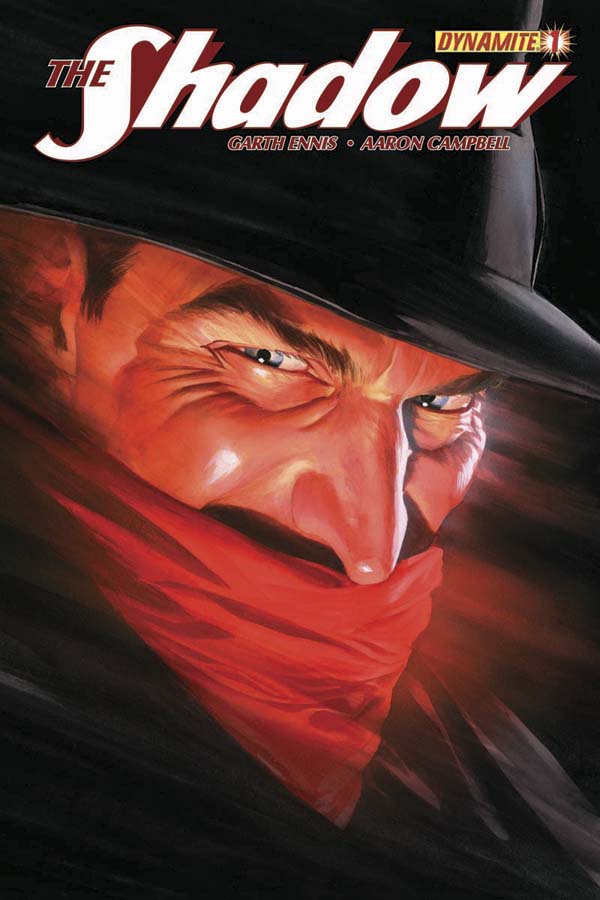 Who knows what evil lurks in the hearts of men? (Hint: The guy dresses up in a cape and runs around at night. And it's not Batman.) Who knows what evil lurks in the hearts of men? (Hint: The guy dresses up in a cape and runs around at night. And it's not Batman.)
The Shadow still knows — as do Flash Gordon, the Lone Ranger, the Green Hornet and other heroes of 1930s and '40s radio shows, pulp magazines and movie serials.
These good guys are making a comeback, though mainly in comics and feature-length movies. Next month, The Shadow receives a comics reboot courtesy of Dynamite Entertainment, which also publishes ongoing series starring Flash Gordon and Green Hornet plus a new title with pulp hero The Spider that's due in May.
On the big screen, a masked Seth Rogen stung bad guys in last year's The Green Hornet. And in The Lone Ranger, in production for release in 2013, Armie Hammer rides tall as the title cowboy with Johnny Depp as his sidekick Tonto. Baby Boomers grew up watching the Clayton Moore TV series in the '50s, although the saga began as a 1933 radio show in Detroit.
Though these characters may not be as well known as today's comic-book superheroes or the Star Wars and Harry Potter clans, they were the bee's knees for a generation that was decades away from the Internet and iPods.
Before Batman, there was the alter ego Lamont Cranston donning the shadowy mask and hat while haunting radio waves as The Shadow, voiced by Orson Welles in the late '30s.
And before Superman and Captain America there was Flash Gordon, an all-American space adventurer who tussled with planetary tyrant Ming the Merciless in sci-fi comic strips by Alex Raymond and serial films starring Buster Crabbe.
"The '20s and '30s are seen as a very romantic age, with the criminal underworld of urban America and high adventure of exotic foreign locations providing a bit of an edge," says Garth Ennis, who is writing the new Shadow comic. "The reality, I'm sure, would have been mostly a lot more mundane and occasionally quite grim."
He's crafting The Shadow as a dangerous champion of law and order with a flair for the dramatic, and he is embracing one of the vigilante's oldest and most famous traits: his habit of laughing as he consigns his enemies to their doom.
"I decided to be fairly sparing with it," Ennis says. "If he started howling every time he threw a punch or fired a shot, it would get old fast. So I decided to preserve the laugh for moments of deep, dark, extreme humor."
His take on The Shadow comic is a bloody affair, where the mysterious figure dispatches bad guys with violent aplomb. More than 70 years ago, though, audiences had to visualize with their imagination what was going on during the radio-show exploits.
The popularity of the old Shadow and Green Hornet radio shows and their ilk in their heyday is best compared to programs children flock to today, such as Hannah Montana and Dora the Explorer, says Martin Grams Jr., a radio-show historian and author.
Back then, kids and adults would read books, pulps and comics because they were a cheap form of entertainment, and radio was an even bigger medium because it was free.
Some adaptations tank
While movies measure success with box-office receipts, commercial sponsors would gauge ratings of radio shows based on the number of giveaway premiums offered during the commercial breaks — such as various Lone Ranger rings and badges. They were then used to persuade sponsors to stick around because of a large listener base.
It wasn't just kids, either. Housebound and disabled people "who couldn't go visit their local movie theater had the opportunity to enjoy action and adventure with the turn of their dial," Grams says.
"The business of pop culture was defined during the 1930s and 1940s when movie producers snatched up the screen rights to popular radio programs and produced motion pictures, serials and film shorts based on the properties."
Since then, movie studios, TV networks and comics publishers have attempted adaptations of those characters, with varying results.
The Lone Ranger TV series began in 1949, ran eight seasons and defined the character for many. Flash Gordon sped off to space with live-action and animated shows, and a 1980 film became a cult classic with Sam Jones clad in a white shirt bearing the word "Flash."
But two more recent movies, The Shadow (1994) with Alec Baldwin and the 1996 Billy Zane vehicle The Phantom (based on the comic strip from the '30s), were not exactly heroic at the box office. And Disney's new big-budget John Carter, based on the Edgar Rice Burroughs pulp sci-fi hero, has thus far tanked.
"My theory is that modern audiences have a hard time accepting un-ironic heroism unless it's presented just right," says Eric Trautmann, writer of Dynamite's Flash Gordon: Zeitgeist series. (A devotee of the era, Trautmann has a Maltese Falcon on his desk, a statue of Humphrey Bogart as Sam Spade, a Buck Rogers blaster and a replica 1930s radio.)
He concedes that pulp is difficult to write because it requires a certain innocence. Nazis show up in his series, but when they're the evil-doers du jour, modern audiences can't help but think of the Holocaust, "a sort of demise of innocence for the Western world." That makes it a lot harder to take the proceedings seriously.
'We're all geeks in a way'
"The obvious inclination is to keep things a little more self-referential and cartoony, tongue firmly in cheek," Trautmann says, "and that kind of thing really works against the story, the character, and readers' and viewers' embracing the tale."
Those characters of yesteryear, however, remain important in the history of pop-culture heroes, says comic-book artist Alex Ross, one of the creative spearheads of Dynamite's pulp series.
"Seeing how a character like The Shadow would influence every other flamboyant costumed hero in history was very interesting to me," he says. "A load of the earliest superhero fashions came from the artists swiping from Alex Raymond's Flash Gordon."
Heroic fiction draws from a lot of the same wells. Without John Carter in 1917, Trautmann feels we probably don't get Flash Gordon in 1934, a quintessentially American protagonist whose "unflappable 'can do' attitude and unshakable optimism would resonate in almost any era." Without Flash, there's no Luke Skywalker or Han Solo in Star Wars, and without that, we don't get Avatar.
"Even Star Trek owes a debt to period literature —Captain Kirk as Horatio Hornblower in space," Trautmann says. "Heroic fiction shares those archetypes and themes, so that influence is probably so ingrained now that a modern practitioner might not even be aware of what influenced the sources he or she is drawing inspiration from."
Affection for heroic pulp specifically — as with old-school sci-fi, fantasy and mystery stories — seems to be cyclical, Trautmann says. But the resurgence of these characters is also being helped by an overall nostalgia for the early- to mid-20th century, from Boardwalk Empire to Mad Men.
"It's been a rough decade or two," he says. "Looking back on what seems to be a simpler, less complicated time is certainly appealing."
Curiosity and a drive to seek knowledge are probably the main reasons people like to revisit historic pop culture, Grams says.
"We're all geeks in a way, trying to intake all the information we can on a comic-book character or movie, then digest, then recollect to friends to show how much more we know than they do."
The historian enjoys seeing kids introduced to heroes that were a seminal part of their grandparents' lives. He says it's a good bet they know tons more about The Hunger Games and Twilight than old Shadow magazine tales, and have no idea of the existence of Lone Ranger radio shows of yore.
"In my experience," Ennis says, "these characters tend to be pretty strong to begin with: They go through periods of revival, then slump due to overindulgence, then lie dormant, then undergo the next revival. But they always come back."
And, Grams notes, "the oldies are still the goodies."
Source: Original Report on Nexus Point News | Comments (0) | E-mail Article | Add a CommentDC Studios and their co-head James Gunn have talked about a lot of potential series and films with some of them being mentioned and then sort of forgotten about. One of those seemed to be Paradise Lost, a Wonder Woman prequel series showing life on Themyscira before the birth of Diana. Though after its initial mention, the project hadn’t been talked about in a while and someone asked Gunn its fate. Gunn insisted the project was still in the works and now we are seeing some possible confirmation. Back in 2024, two names were attached as writers on the series Kira Snyder and Janet Lin and now, according to the WGA website, both are set to work on Paradise Lost for 2027-2028. Snyder is known for writing and producing on The Handmaid’s Tale and The 100 while Lin has credits on Bridgerton, Cursed, and Bones. There has been talks recently about trying to fast track a new Wonder Woman film and while there is no confirmation, rumors persist that the character may debut in Man of Tomorrow, so seeing Paradise Lost finally moving forward would make a lot of sense. 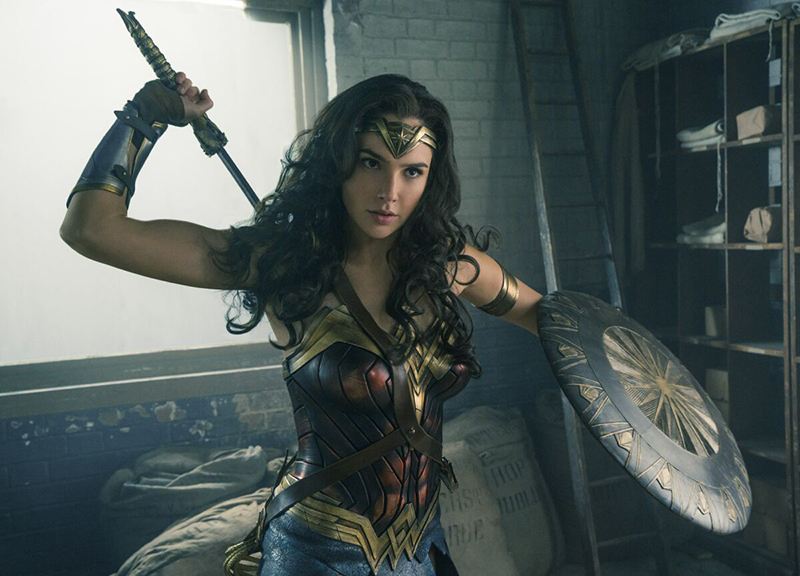
Source: Forbes | Comments (0) | E-mail Article | Add a CommentSony’s new Spider-Noir series has out done the MCU when it comes to fans. According to Forbes, the new Nicholas Cage lead series with him playing a 1930s variant of Spider-Man has garnered the highest audience score of all Marvel related television projects on Rotten Tomatoes. In the new series, Cage plays detective Ben Reilly who used to be the web-swinging hero called The Spider but hung up his mask after the death of his fiancée. Audience have really taken to the series that is available in both color and B&W, giving it a 93% (a point higher than when Forbes did their article) and even scored well with the critics at 92%. While the critic score is impressive, other Marvel projects have done better such as X-Men ’97 with a 99% score and Ms. Marvel with a 98% among critics. But on the audience side, 93% is tops beating out shows like Agents of SHIELD, Daredevil (Netflix) and WandaVision. While there has been no word on a second season, it would be hard for Amazon and Sony to ignore results like this. 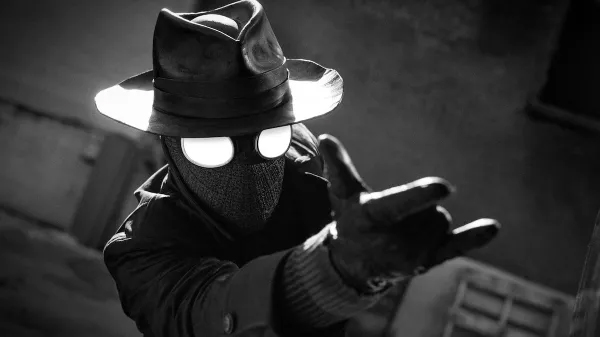
Source: Threads | Comments (0) | E-mail Article | Add a CommentJames Gunn, co-head of DC Studios and writer/director of the upcoming Man of Tomorrow film, was back on social media this week answering questions and one in particular stood out. A Threads user named “boyturizmo” asked, “Will we ever see General Zod, Doomsday, Dr. Fate, Black Adam, Ultraman (with his Crime Syndicate) or Darkseid?” Gunn replied, “Two of them in not too long…” This of course led to a ton of speculation on which two and where? Now the obvious one is Darkseid, and while Gunn has said his DCU isn’t building toward a big Thanos like battle with Darkseid, the character is going to be appearing in the upcoming animated series Mr. Miracle. The series is in production with comic writer Tom King onboard as the showrunner and he recently showed off a clip to interviewer Brandon Davis, who did not share what he saw. Mr. Miracle is an escape artist raised on Darkseid’s planet Apokolips who falls in love with a warrior woman named Big Barda and they escape to Earth. Though no casting has been announced for the series, Gunn has stated that the animated series are cannon to the DCU and actors cast in the animated shows, like Frank Grillo as Rick Flag Sr., would carry over into live action like Grillo did in both Peacemaker and Superman. As for the second character we will see soon, it is possible that Gunn could bring back more characters from the DCEU and have Dwayne Johnson return as Black Adam or Pierce Brosnan don the helmet of Dr Fate once more. And Ultraman could return from the black hole he was sucked into… but I think the most likely possibility will be in flashbacks to Krypton, possibly in Supergirl, where we could see General Zod cameo in a scene with Jor-El ( Bradley Cooper) and Zor-El ( David Krumholtz) discussing the fate of the planet and how to handle it. This would be a great scene for world-building… though part of me really wants Brosnan back as Fate.  SEBASTIAN STAN ON HIS "MANY ROLES" IN THE BATMAN PART 205/24/26 @ 1:45 pm EST
Source: Deadline | Comments (0) | E-mail Article | Add a CommentWith The Batman Part 2 going into early production, fans are eager for news, information and confirmations and we may just have one thanks to one of the newcomers to the franchise, Sebastian Stan. It’s been rumored for months that the actor who has played everything from Bucky Barnes to Donald Trump to Tommy Lee was moving to Gotham in the role of District Attorney Harvey Dent aka coin-flipping villain Two-Face, and while his casting was confirmed by director Matt Reeves a few days back, we have not had an official announcement on the part he will be playing. While speaking to Deadline about his film Fjord, Stan spoke a bit about his summer plans which include a trip to London to work with Reeves where he says he will be playing “many roles in this one”. The article states that he’s talking about the role of Dent and how the character transforms from D.A. to villain when acid is thrown in his face by mobster Salvadore Maroni. Stan goes on to say, ”I’m excited, I’m nervous and trying to keep surprising myself.” He also he has been working with hair and make-up already trying to figure out how his disfigurement will look. Stan doesn’t come out and say in the quotes that he’s playing Two-Face, but Deadline strongly implies it and are one of the sites that had been reporting that he had been cast in the role early on. The Batman Epic Crime Saga, as Reeves calls it, does have one hitch to overcome. During The Penguin series on HBO Max, Maroni was played by Clancy Brown and does not make it through the series. So, either the attack on Dent takes place prior to the events we’ve already seen portrayed or Reeves is going to change up who throws the acid. Not a huge problem but it will be interesting to see how the moment will be handled if we end up seeing it at all. The Batman Part 2 is beginning to film and is on track for an October 2027 release. 
Source: Twitter | Comments (0) | E-mail Article | Add a CommentWinter is coming to Gotham and Matt Reeves is heating up the internet with his social media posts. He started it off with a couple camera tests showing the Batmobile in the snow, letting us know that production had begun on the long-awaited sequel. Then he began letting fans know the cast for the upcoming The Batman Part II starting with a gif of Robert Pattinson as the caped crusader with the quote, “We meet again, my friend.” This led into a series of posts that welcomed back the Dark Knight’s to main allies, Andy Serkis as Alfred Pennyworth and Jeffrey Wright as Jim Gordon. Then we got the two sides of the city fighting for control represented by Jayme Lawson as newly elected Mayor Bella Real and Colin Farrell as crime boss Oz Cobb aka The Penguin. Then he welcomed back the true hero of the film, Gil Perez-Abraham as Officer Martinez. Martinez is the representation of how the GCPD views The Batman as he appears multiple times in the first film, each time becoming more comfortable with working with the vigilante. Reeves would return to posting the next day and introduce the new characters to the film, but through gifs from their previous projects and not officially naming characters. This would include three MCU veterans starting with Scarlett Johansson and Sebastian Stan. Then Game of Thrones patriarch Charles Dance, from A Good Day to Die Hard, Sebastian Koch and from Atlanta and the Eternals, Bryan Tyree Henry. Stan has been heavily linked to the role of Harvey Dent aka Two-Face with Dance likely playing his father Christopher. Johansson is believed to be playing Dent’s wife Gilda but that has never been confirmed and there had been no rumors at all about Koch and Henry, though Koch’s management posted a tweet about him helping rid Gotham of evil. Many on-line are speculating that Henry could be playing Detective Harvey Bullock. What is interesting are the names not mentioned in posts such as Con O’Neil as Chief Mackenzie Bock, Barry Keoghan as the Joker and Paul Dano as the Riddler. I wouldn’t assume that not being mentioned doesn’t mean they don’t show up in the film, just that the character may not have a lot of screen time. The assumption is that the film will focus on Dent working with Gordon and Batman to clean up Gotham, so there will be lots of room for other characters in this film. The film has started production and is on track to premiere in October of 2027. 
Source: Threads | Comments (0) | E-mail Article | Add a CommentWe are in the age of Matthew Lillard and everyone except Quentin Tarantino seems to be happy about it. The Scream and Scooby-Doo actor has been having a bit of a resurgence lately coming shortly after Tarantino made some disparaging comments about the actor with no provocation. Many in the industry stood up for Lillard and now the actor seems to be popping up everywhere including the latest Scream film, the second season of Cross and the second season of Daredevil: Born Again. The latest news reported by multiple sites has the actor joining the cast of Man of Tomorrow, the next DC Studios film written and directed by James Gunn. Gunn, who is good friends with Lillard and has worked with him previously on both Scooby-Doo movies, posted the below image of the pair together, commenting on the news reports as “pure speculation” and saying that they are just “casually hanging out”. Most took the posts to be sarcasm and assume that Lillard is now in the film as that is where Gunn is right now, filming the project. Fans on-line have begun even more speculation as to who Lillard could be playing including various heroes and characters with the most notable being Jim Gordon from Gotham and Plastic Man, a character that Gunn and Lillard once tried to pitch as a project to DC/Warner Bros. It’s my belief that he will be a more Superman centric character such as STAR Labs Professor Emil Hamilton or police detective Dan Turpin. But that also would be pure speculation. 
Source: Twitter | Comments (0) | E-mail Article | Add a CommentFans of Matt Reeves’ film The Batman got excited this week because of driving in the snow. The director posted images to his social media showing test footage of the Batmobile driving in winter conditions, which were the first signs that the long-awaited sequel had begun production. Though it has been postponed many times, it is set to be released in October of 2027 and will make the first time live-action Batman and Superman films will be released in the same year. The cold weather setting has long been assumed for the film based on the timeline created in both the first movie starting on Halloween and ending on Election Day and then The Penguin series on HBO Max which took place over a week or so immediately after the flooding of Gotham. The new film will pick up right after the award-winning series which places the time frame squarely in December. The plot for the film is still under wraps, but along with returning stars Robert Pattinson, Andy Serkis, Colin Farrell, Barry Keoghan and Jeffrey Wright, the project has reportedly added Scarlett Johannson, Sebastian Stan and Charles Dance. Stan is reported to be playing Gotham DA Harvey Dent aka Two-Face while Dance is said to be his father, Christopher. These castings have been reported by multiple reputable outlets but not confirmed by DC Studios or Reeves. With production having begun, the film is on track to keep its release date of October 2027. 
Source: Threads | Comments (0) | E-mail Article | Add a CommentJames Gunn, co-head of DC Studios, has addressed the strange “partial reboot” of the DCEU and why he didn’t just start completely fresh. With the new DCU starting with the animated Creature Commandos series and the new Superman movie, certain elements from the previous regime carried over like Viola Davis as Amanda Waller and there were some questions about more recent projects like Gunn’s own The Suicide Squad and Blue Beetle. And Gunn’s first DC movie also had elements from previous films including Margot Robbie as Harley Qiunn. So why not just start over? Turns out a lot of it has to do with the John Cena lead Peacemaker series on HBO Max. According to a social media post by Gunn, “Peacemaker Season 2 deals were all in place when I became head of DC. It was either break everyone's contracts and pay out all that money and take away HBO Max's biggest show at the time or find a way to make it work. I chose the latter. Mostly tho because I love the character and the show and thought he/they could be an important part of the DCU.” Now, this has left quite a mess trying to figure out what is and isn’t cannon, and Gunn realizes this. He posted, “I've been thinking about this a lot in regards to The Suicide Squad & Blue Beetle and I've been meaning to rewatch both with an eye towards that knowing what I know now almost three years into the DCU (with a couple more years of scripts being actively filmed or created). Maybe after MoT Jenn & Steve & I can get together for a special couple podcasts to discuss. What do you guys think is potentially or definitely NOT canon from TSS & BB?” He is referring to Jennifer Holland, his wife and actress who plays Harcourt and Steve Agee who plays Economos. The three of them did the post-episode podcasts for Peacemaker season two. Doing The Suicide Squad film makes sense with its ties to Peacemaker, but the reason for the Blue Beetle is that there are talks of an animated Blue Beetle series based on the 2023 film with Xolo Maridueña continuing in the role of Jaime Reyes. The fact it’s included here confirms the animated series is still happening.  DAVID HARBOUR ENLISTS FOR ‘JOHN RAMBO’ PREQUEL04/18/26 @ 12:44 pm EST
Source: Deadline | Comments (0) | E-mail Article | Add a CommentDavid Harbour is heading into the jungle. The actor has joined the cast of John Rambo, an upcoming origin-story film set before the events of First Blood. Harbour will portray Major (also known in earlier films as Colonel) Sam Trautman, the tough-minded commander and mentor figure long associated with the franchise. The film stars Noah Centineo as a younger John Rambo and is directed by Jalmari Helander ( Sisu) from a screenplay by Rory Haines and Sohrab Noshirvani. The project is expected to explore the experiences that forged Rambo into one of action cinema’s most enduring figures—years before he returned home to the confrontation that launched the original 1982 film. John Rambo is backed by Lionsgate and Millennium Media, with Templeton Media and AGBO also involved, and has reportedly wrapped production in Thailand. Additional cast members include Yao, Jason Tobin, Quincy Isaiah, Jefferson White, and Tayme Thapthimthong. Sylvester Stallone—who originated the role across five films—is attached as an executive producer, alongside Anthony and Joe Russo and other producers tied to the project. 
Source: Deadline | Comments (0) | E-mail Article | Add a CommentDeadline is reporting that Game of Thrones actor Charles Dance will be joining the cast of the upcoming The Batman Part 2, which is set to start filming in the next few weeks. While this is unconfirmed by DC Studios, Dance is believed to be playing Charles Dent, the father of Harvey Dent aka Two-Face played by fellow newcome to the franchise, Sebastian Stan. There had been many reports over the last few months of other actors turning down the role of the elder Dent which is believed to have some parallels with the role Dance is best known for, Tywin Lannister. He joins a cast that also returns Robert Pattinson, Andy Serkis, Colin Farrell and that has added Scarlett Johansson in an undisclosed part. Prior to joining the Matt Reeves’ sequel, Dance appeared recently in Guillermo Del Toro’s Frankenstein and the Peacock series Day of the Jackal.  |